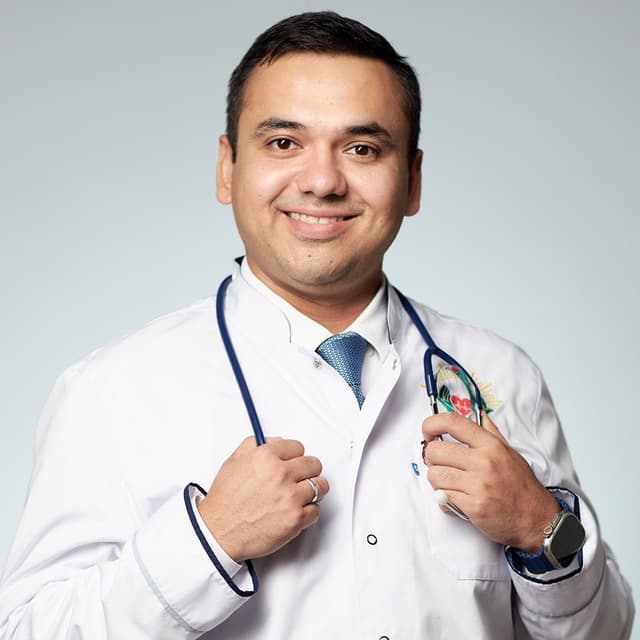
Cardiologist-arrhythmologist · electrophysiologist
NasirovichSherzodSabirov
From diagnosis to ablation and heart devices — in the hands of one doctor.
Head of the Arrhythmology Department at the Ezgu Niyat clinic since 2020. Before that — ten years at the Bakulev Center in Moscow.
- Member of ESC and EHRA
- PhD
- Bakulev Center, Moscow
- Experienceyears
- 16
- in cardiac surgery and arrhythmology, since 2010
- Bakulevyears
- 10
- at the cardiovascular surgery center in Moscow
- Ezgu Niyatyears
- 6
- Head of the Arrhythmology Department, since 2020
- Sciencepapers
- 7
- in international and Russian-language journals, including Europace
Career path
From Tashkent to Moscow and back to Tashkent
Each beat is one stage. The information is taken from the CV signed by the doctor himself.
2003
2003–2010
Higher medical education
Tashkent Medical Academy
2010
2010–2012
Residency in cardiovascular surgery
A. N. Bakulev Scientific Center for Cardiovascular Surgery, Moscow
Student of Academician L. A. Bockeria.
2012
2012–2015
PhD and junior research fellow
A. N. Bakulev Scientific Center for Cardiovascular Surgery, Moscow
Research in cardiovascular surgery.
2015
2015–2020
Cardiovascular surgery
A. N. Bakulev Scientific Center for Cardiovascular Surgery, Moscow
As part of the surgical team, he participated in open and closed heart operations. In 2017 he received the center’s certificate.
2018
2018–2019
X-ray endovascular diagnosis and treatment
A. N. Bakulev Scientific Center for Cardiovascular Surgery, Moscow
Additional training in diagnosis and treatment through a catheter.
2020
2020 — now
Head of the Arrhythmology Department, electrophysiologist
Ezgu Niyat Multidisciplinary Medical Center
Since January 10, 2020: Interventional Arrhythmology Department. In 2025 his article was published in Europace, the journal of the European Heart Rhythm Association.
What he can do
The whole path of a rhythm disorder — in one pair of hands
From testing to ablation and heart devices. Click each item to read more.
- Non-invasive testsAll non-invasive tests in cardiology: ECG, Holter and others. Finding a rhythm disorder starts with them.
- Electrophysiology studyReading electrical signals from inside the heart to find where an arrhythmia starts.
- Ablation of tachyarrhythmiasTreating the source of a fast heartbeat through a catheter.
- Cardiac pacingImplanting a pacemaker when the rhythm is slow or has pauses.
- Implantable defibrillator (ICD)A device that stops a life-threatening rhythm on its own.
- Resynchronization therapy (CRT)Coordinating the work of the ventricles in heart failure.
- Device checks and follow-upChecking that an implanted pacemaker, ICD or CRT device is working correctly, and adjusting it.
- Coronary interventionsCatheter-based work on the heart’s vessels, based on X-ray endovascular training.
Science and community
Member of the European cardiology community
Scientific publications
7
scientific papers, 2015–2025. Including Europace — the journal of the European Heart Rhythm Association.
View all publicationsESC
European Society of Cardiology
The society that issues the European recommendations on heart disease.
Member
EHRA
European Heart Rhythm Association
The association of arrhythmologists and electrophysiologists within the ESC.
Member
Languages spoken
Uzbek · Russian · English
Articles on the site
Articles for patients are based on ESC and EHRA recommendations: the societies the doctor is a member of.
Where he sees patients
Ezgu Niyat Multidisciplinary Medical Center
- AddressTashkent, 4 Olmazor Street
- Working hoursMon–Sat, 08:00–16:00
- Phone+998 97 490 86 75
Languages spoken: Uzbek, Russian, English. ESC · EHRA.
An individual approach to every patient, clear explanations and evidence-based advice. No diagnosis is made through the site: decisions are based on the doctor's examination and test results.